
What is EMV (chip card technology)?
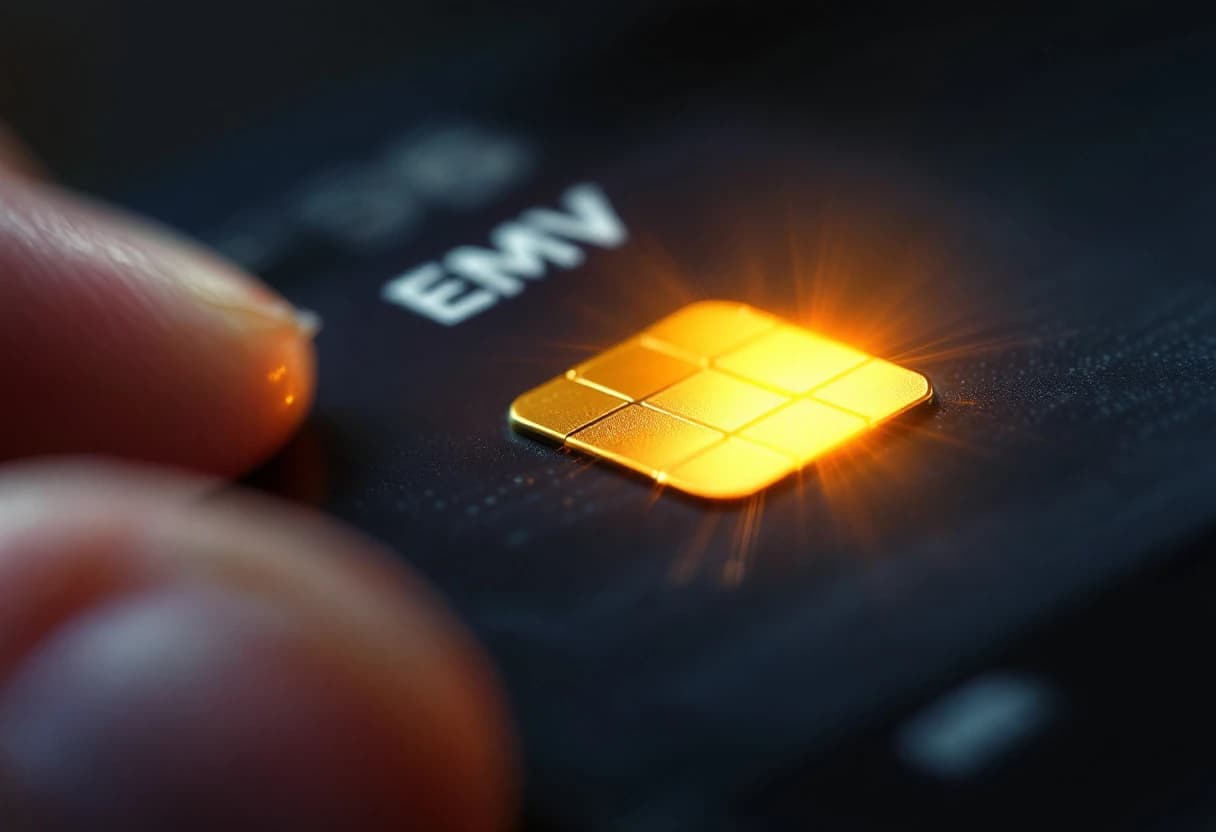
EMV is the small metallic chip built into most debit and credit cards. The letters stand for Europay, Mastercard, and Visa, the three card networks that built the standard together. A magnetic stripe stores the same fixed data every time it's swiped. The chip does something smarter: it builds a brand-new one-time code for every single payment, which is why chip and tap payments are so much harder to copy or fake.
What EMV actually means
EMV stands for Europay, Mastercard, and Visa, the three payment networks that built the chip standard together back in the 1990s. Europay does not exist as its own company anymore, but the name stuck.
In practice, EMV just means “the chip.” It is the small square of metal on the front of most debit and credit cards. Inside that square sits a microprocessor, a tiny built-in computer, that can run a quick calculation every time you pay. Today, over 96% of card payments in the U.S. run through a chip or tap instead of a swipe.
Chip vs. stripe: why one is safer
A magnetic stripe is a passive strip. Whatever is coded onto it comes out the same way every time, forever. If a thief captures that data once, with a hidden skimmer or a stolen card reader, they can copy it onto a blank card and use it again and again. That copy problem was the biggest source of in-person card fraud for decades.
A chip solves it differently. Every time it is dipped or tapped, it runs a short exchange with the terminal and builds a one-time code just for that one purchase. Even if someone managed to steal that exact code, it is already used up. It cannot pay for anything else. Since chip cards became standard in the U.S., counterfeit card fraud at chip-reading terminals has dropped by roughly 76%.
Swipe vs. dip vs. tap
All three still use the same physical card. The difference is which part of the card the terminal reads, and what that means for security.
Pulls the same fixed data off the magnetic stripe every time. That data can be copied and reused on a fake card.
The chip builds a brand-new one-time code for that one payment. A copy of the code is useless a second time.
Same chip, sent over a short wireless link instead of a physical read. Encrypted and just as secure as a dip.
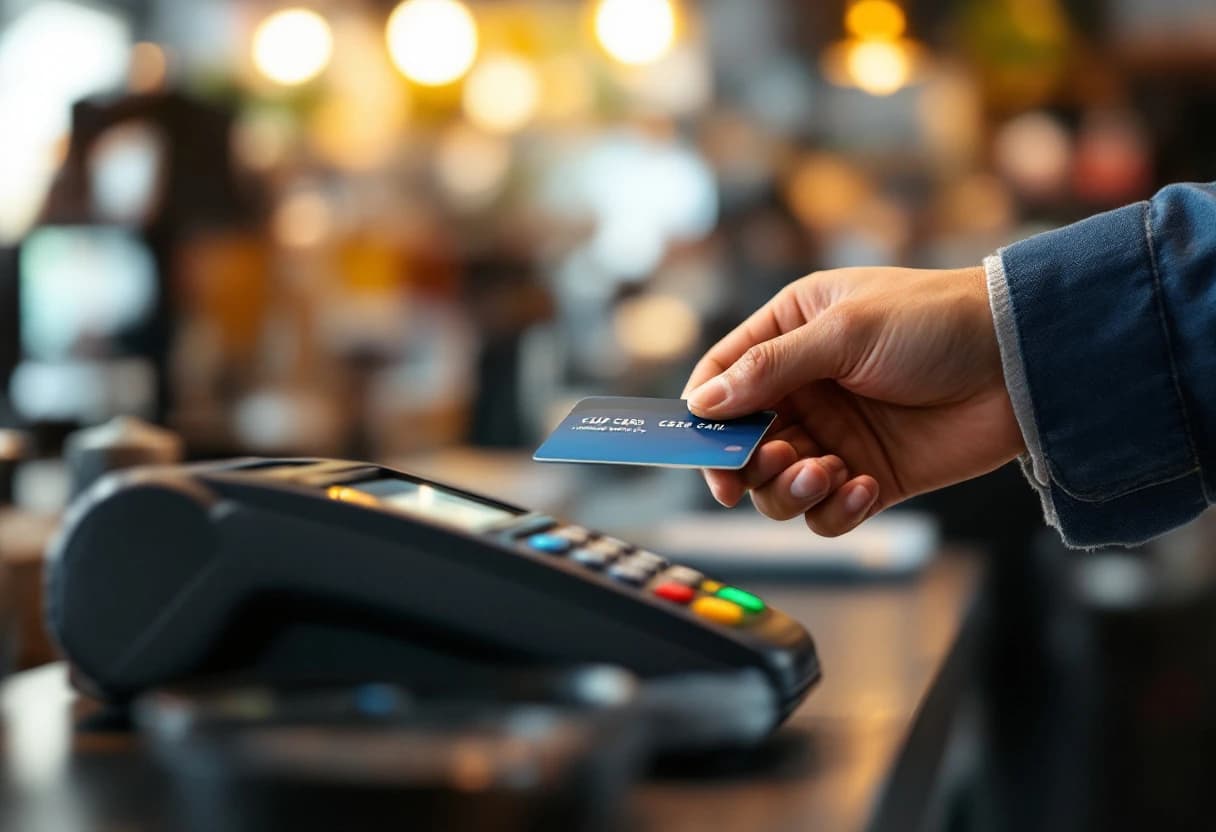
A swipe pulls data straight off the stripe, which is why it is the fastest and the weakest of the three. A dip reads the chip through direct contact and takes a couple of extra seconds to build that one-time code. A tap reads the same chip over a short-range wireless signal, so it is both fast and just as secure as a dip. NWPB sets merchants up with terminals that support all three, so staff always have the secure option ready.
The 2015 liability shift, and why it matters to you
Before October 2015, if a customer paid with a counterfeit card, the card's issuing bank generally absorbed that loss. After that date, the rule changed: whichever side has the weaker technology pays.
Here is what that means in plain terms. Liability shift is just an industry name for “who pays if the card turns out to be fake.” If your terminal can read a chip and a customer still swipes a fake stripe card through it, or your terminal cannot read chips at all, you can end up eating that fraud loss yourself instead of the bank. A terminal that supports chip and tap, used the way it is meant to be used, moves that risk off your plate.
Should you upgrade your terminal?
If your terminal is old enough that it only reads a swipe, or staff are told to skip the chip reader to save a few seconds, the answer is yes. It is not about a new gimmick. It is about closing off a fraud risk your current setup is quietly leaving open.
Most terminals sold today read swipe, dip, and tap in the same device, so it is a one-time hardware swap rather than a new habit to maintain. NWPB provides modern terminals that handle all three, and we check your current hardware for free as part of any statement review. See terminal options for what we currently install, and check the basics in PCI compliance for small business while you are at it.
Fair questions
Do I need a new machine to take chip cards?
If your terminal is more than a few years old, probably yes. Most terminals sold today read chip, tap, and swipe in one device, so it's a one-time swap, not an ongoing hassle. See terminal options below for what's current.
What if I don't upgrade to EMV?
You can still take payments, but you carry more of the risk. If a customer pays with a fake chip card and your terminal only reads the stripe, the liability shift can put that fraud loss on you instead of the card's bank.
Is tap as secure as chip?
Yes. A tap payment uses the same chip and the same one-time code as a dip, just sent over a short wireless link instead of a physical contact. Both are treated as equally secure under EMV rules.
Can EMV chips be hacked?
Nothing is unhackable, but a chip is much harder to clone than a stripe. Since each code only works once, stealing one payment's code doesn't help someone fake the next one. That is the whole point of the design.
Why is dipping slower than swiping?
The chip and the terminal run a quick back-and-forth check to build that one-time code, which takes a couple of seconds. A swipe just reads fixed data instantly, with no check at all. The extra second buys real security.
Send one statement. Plain-English answer in 24 hours.